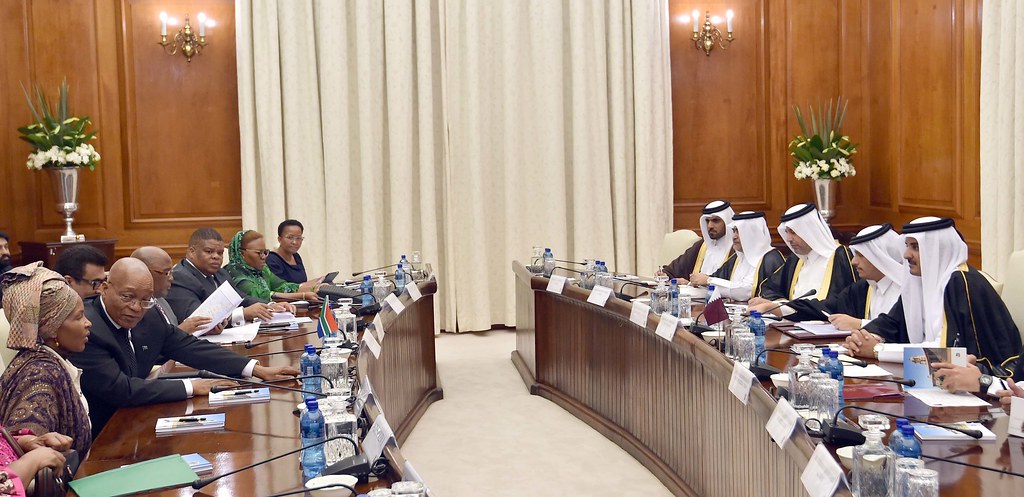
Qatar's prime minister has called on the United States and Iran to avoid waiting for an ideal moment to resume negotiations aimed at ending the war in Yemen. The statement comes amid ongoing conflict in the region, where the Houthi movement, backed by Iran, continues to exert influence over the country's political and social landscape. The remarks were made during a broader discussion on the impact of Houthi governance on the younger generation in Yemen, highlighting concerns over the long-term effects of the conflict on children and education.
The Qatari leader emphasized the urgency of diplomatic engagement, stressing that delays could further destabilize the region. This aligns with Qatar's historical role as a mediator in Middle Eastern conflicts, though its influence has been challenged by shifting alliances and the complexity of the Yemeni crisis. The call for immediate talks follows recent reports suggesting that previous attempts at dialogue between the US and Iran had stalled, though these claims were later denied by Qatari officials.
The situation in Yemen has been marked by a protracted conflict involving multiple factions, including the Houthi rebels, the Yemeni government, and external actors such as Saudi Arabia and the United Arab Emirates. The war has led to severe humanitarian crises, with millions of civilians affected by food shortages, disease, and displacement. The Houthi movement, which controls large parts of the north, has been accused by Western nations of receiving support from Iran, a claim Tehran consistently denies.
The ongoing tensions underscore the broader geopolitical stakes of the region, where the balance of power continues to shift. As the conflict persists, the call for renewed diplomatic efforts reflects both the challenges and the hopes of those seeking a resolution to one of the world's most complex and enduring conflicts.