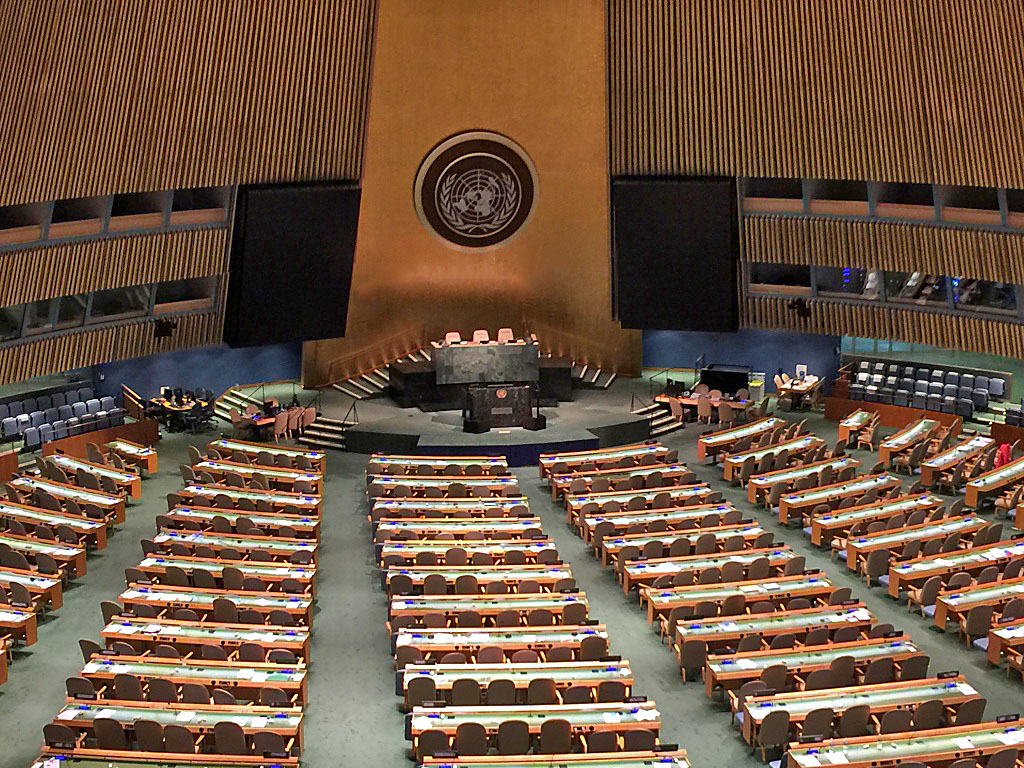
Iranian President Masoud Pezeshkian addressed the United Nations General Assembly in New York on Wednesday, delivering a speech that rejected U.S. Pressure while calling for dialogue. His remarks came after U.S. President Donald Trump had warned of “annihilating” Iran during an earlier address at the same event. Pezeshkian emphasized Iran’s refusal to surrender to American demands, maintaining a firm stance while expressing openness to discussion.
The U.S. Delegation walked out during Pezeshkian’s speech, signaling a sharp diplomatic rift. Trump’s earlier threats against Iran had heightened tensions, with Pezeshkian directly responding to the accusations. Despite the walkout, Iran’s leader reiterated a commitment to regional stability and dialogue, framing his message as one of resilience rather than confrontation.
The UN meeting highlighted ongoing geopolitical tensions between Iran and the United States. While the U.S. Delegation’s departure underscored the severity of the disagreement, Pezeshkian’s speech aimed to assert Iran’s autonomy and position itself as a key player in regional affairs. The event underscored the complex dynamics at play in international diplomacy.
The confrontation at the UN General Assembly reflects broader challenges in U.S.-Iran relations, with both sides adopting starkly different approaches to conflict and cooperation. As the situation unfolds, the implications for regional security and international diplomacy remain closely watched.