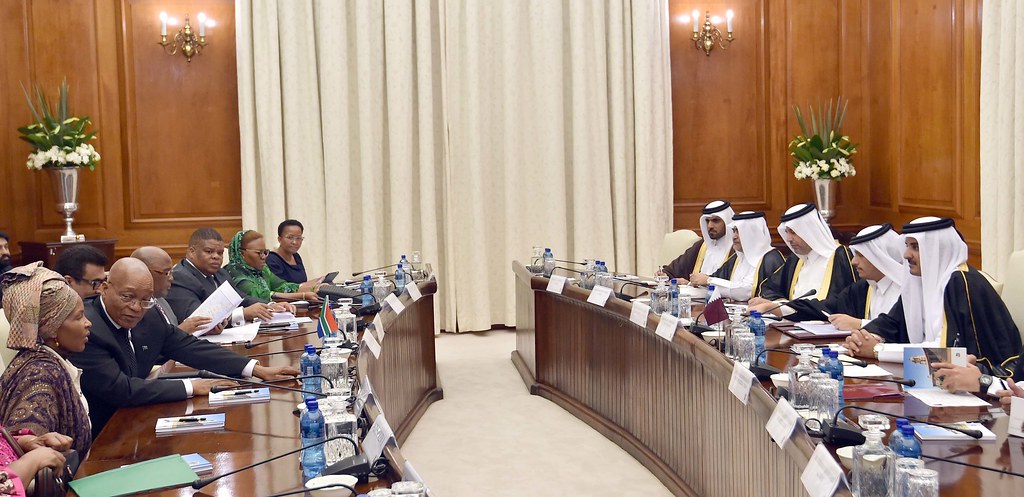
Iran and Qatar held their third day of talks on Saturday to address the escalating US-Iran conflict. The discussions, mediated by Qatar, aim to de-escalate tensions between Tehran and Washington. Iranian Foreign Minister Abbas Araghchi emphasized that Iran is prepared for both defense and diplomacy, signaling a willingness to engage in dialogue.
The talks come amid heightened regional tensions, with the US and Iran both deploying military assets in the Persian Gulf. Reports indicate that Iran’s military has demonstrated “epic resilience,” according to an official statement, pushing the US and its allies toward a “hard wall of reality.” This rhetoric underscores the growing complexity of the conflict.
Qatar has played a central role in facilitating the talks, positioning itself as a neutral mediator. The UAE’s presidential adviser expressed hope that a diplomatic breakthrough could avert further confrontation. However, the US and Iran remain at an impasse, with neither side willing to compromise on key issues.
The situation reflects a broader pattern of regional instability, with Iran and the US locked in a cycle of brinkmanship. Qatar’s involvement highlights its strategic importance in the Middle East, despite its small size. The outcome of these talks will determine whether diplomacy can prevent further escalation.
The conflict has already led to increased military activity, with reports of Iranian vessels being targeted in the Gulf. While the talks continue, the path to resolution remains uncertain. The international community watches closely, hoping for a de-escalation that could stabilize the region.